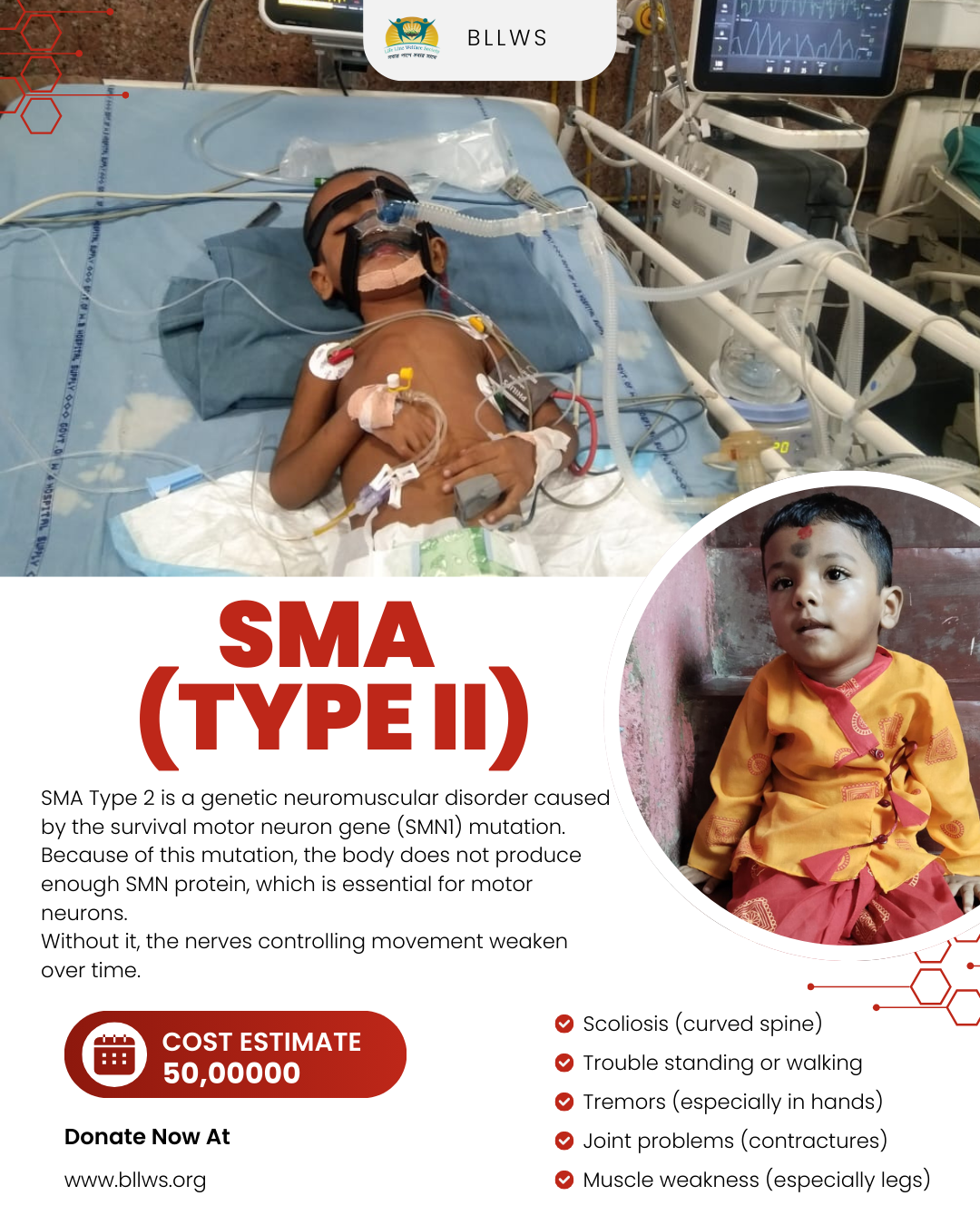
SMA Type 2 is a genetic neuromuscular disorder caused by the survival motor neuron gene (SMN1) mutation.
Because of this mutation, the body does not produce enough SMN protein, which is essential for motor neurons.
Without it, the nerves controlling movement weaken over time.
👶 Who Gets SMA Type 2?
Symptoms usually appear between...
SMA Type 2 is a genetic neuromuscular disorder caused by the survival motor neuron gene (SMN1) mutation.
Because of this mutation, the body does not produce enough SMN protein, which is essential for motor neurons.
Without it, the nerves controlling movement weaken over time.
👶 Who Gets SMA Type 2?
Symptoms usually appear between 6–18 months of age.
Children with SMA Type 2 can sit without support, but cannot stand or walk independently.
🧠 Causes
Mutation or deletion in the SMN1 gene.
Inherited in an autosomal recessive pattern (both parents carry the gene).
🩺 Symptoms
Motor Symptoms
Muscle weakness (especially legs)
Trouble standing or walking
Tremors (especially in hands)
Scoliosis (curved spine)
Joint problems (contractures)
Difficulty lifting arms above shoulders
Other Symptoms
Breathing weakness (mild to moderate)
Difficulty coughing out mucus
Swallowing issues (sometimes)
Fatigue during physical activity
🧪 Diagnosis
Doctors confirm SMA Type 2 using:
Genetic testing (SMN1 gene study)
EMG (electromyography)
Muscle function assessments
CK (creatine kinase) levels (sometimes slightly elevated)
💊 Treatment Options (Modern & Effective)
While SMA has no cure, new treatments significantly improve strength and lifespan.
1. Spinraza (Nusinersen)
First FDA-approved SMA drug
Delivered by spinal injection
Increases SMN protein production
2. Zolgensma (Gene Therapy)
One-time IV gene therapy
Replaces faulty SMN1 gene
Mostly for infants under 2 years
3. Evrysdi (Risdiplam)
Daily oral medicine
Increases SMN protein levels
Approved for adults and children over 2 months
4. Supportive Therapies
Physiotherapy
Respiratory therapy
Orthopedic support (braces, scoliosis treatment)
Nutritional management
🧬 Life Expectancy
With modern treatments, life expectancy for SMA Type 2 is near-normal.
Most people:
Live into adulthood
Continue education and career
Maintain independence with mobility aids
🧡 How It Affects Daily Life
People with SMA Type 2 may use:
Wheelchair for mobility
Standing frames
Bracing for spine
Respiratory support during sleep
But with therapy and medications, they can lead active, productive lives.
🧒 Prognosis
Slow progression over years
Early treatment improves motor function significantly
New medicines greatly reduce complications
SMA Type 2
is a genetic neuromuscular disorder caused by the survival motor neuron gene (SMN1) mutation.